Sunday, November 27, 2011

World's Columbian Expo, Continued

This week, I'll give a brief summary of the World's Columbian Exposition of 1893, and set the tone with some photos taken from books and archives.
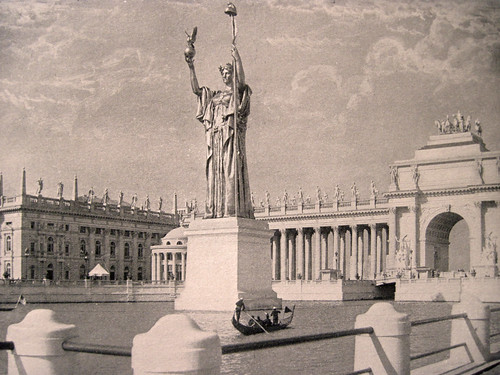
Statue of The Republic
Statue of the Republic

Planning for the Columbian Expo started in late 1889. It was to commemorate the 400th anniversary of Columbus's 1892 landing in America. The Fair opened late, in May 1893, and closed in October the same year. 27 million people attended.
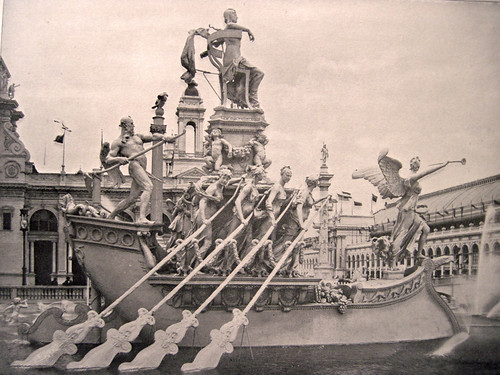
Columbian Fountain
Columbian Fountain

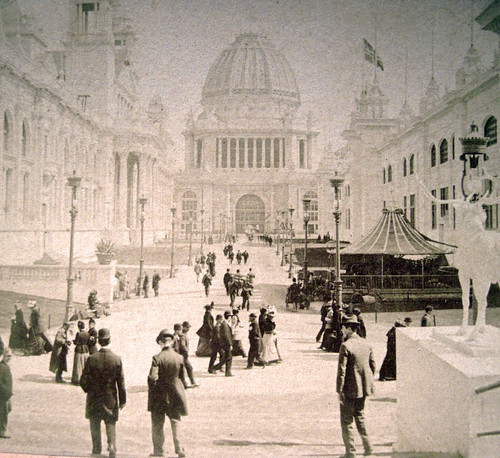
The Fair's major buildings were designed in the neoclassical Beaux Arts style, and was soon nicknamed "The White City." The major buildings in the "Court of Honor" were constructed of iron and steel, and covered in a material called "staff," a mixture of plaster, cement and fiber. Most of the buildings and statuary were constructed this way, and were not meant to last.
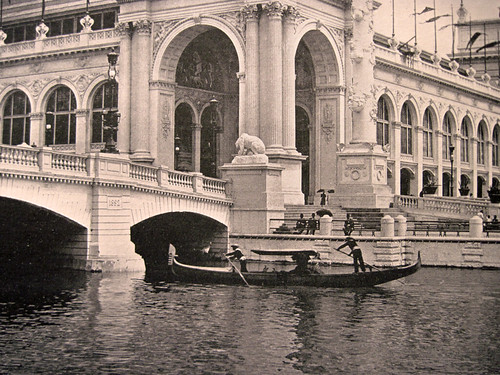
Gondola  at the Manufactures and Liberal Arts Building
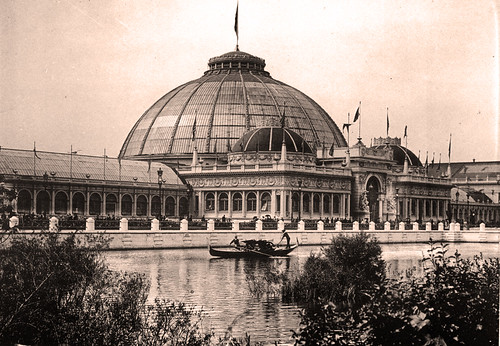
Gondola at the Manufactures and Liberal Arts Building

Horticultural Building
Horticulture Building

The only surviving building within the fairgrounds, which was built to last, is the Palace of Fine Arts, now Chicago's Museum of Science and Industry. In downtown Chicago, the World's Congress Auxilliary Building also survives, and is now the Art Institute of Chicago. The Norway Pavilion was dismantled and taken to Wisconsin, where it now stands in Blue Mounds.
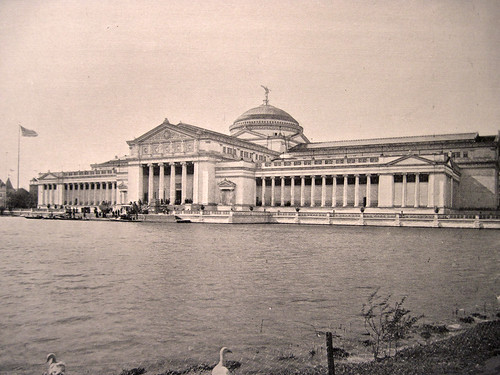
Palace of Fine Art Building
Palace of Fine Arts

While it stood, The Columbian Exposition was a beautiful sight to behold! There were promenades, canals and fountains at every turn. In addition to the main Court of Honor buildings, there were 19 foreign government buildings, 38 state buildings, several individual exhibitors, cafes, restaurants, tea houses and refreshment buildings... a total of 200 buildings to visit! It would take weeks to cover the entire fair.
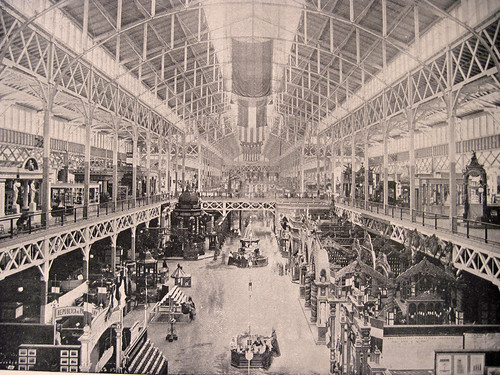
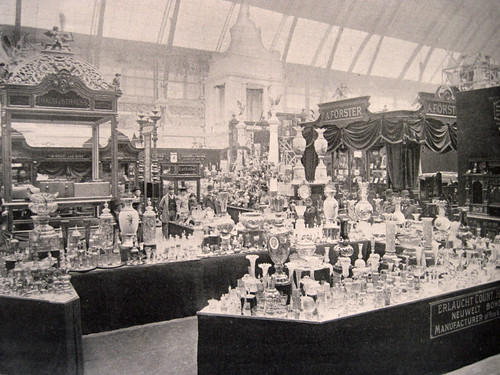
Interior, Agricultural Building
Agriculture Building interior

Bohemian Glass Exhibit, Manufactures and Liberal Arts Building
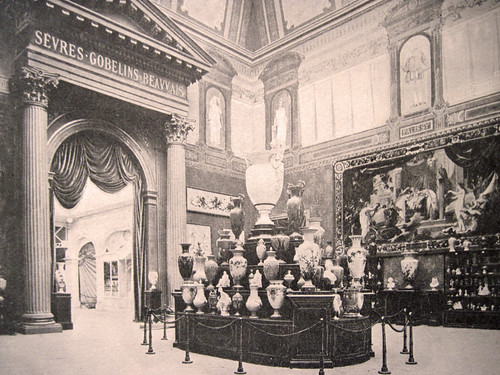

France—Sevres Vases, Manufactures and Liberal Arts Building
France—Sevres Vases display, Manufactures and Liberal Arts Building

The Court of Honor buildings included Administration, Machinery, Agriculture, Manufactures and Liberal Arts, Electricity, Mines and Transportation. Some of the other large buildings were U.S. Government, Horticulture, Women's Building, Forestry, Anthropology, Fisheries and the Palace of Fine Arts.
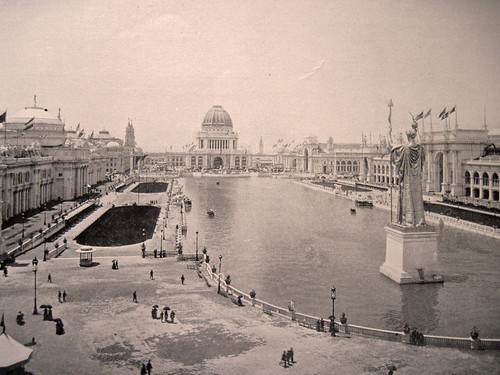
Court of Honor, looking west.
Court of Honor, looking west

Walking toward the Admin. Bldg.
Walking toward the Administration Building
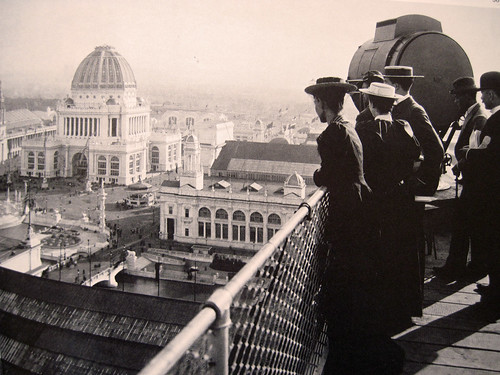
from atop the Manufactures Building roof
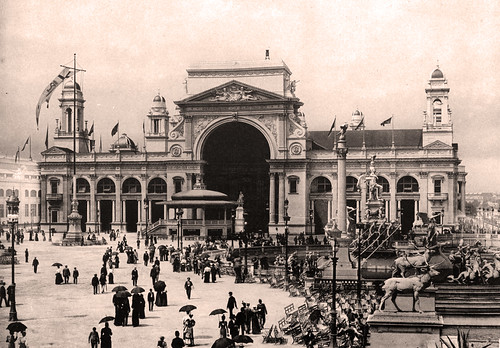
View from atop the Manufactures Building roof

Electricity Building

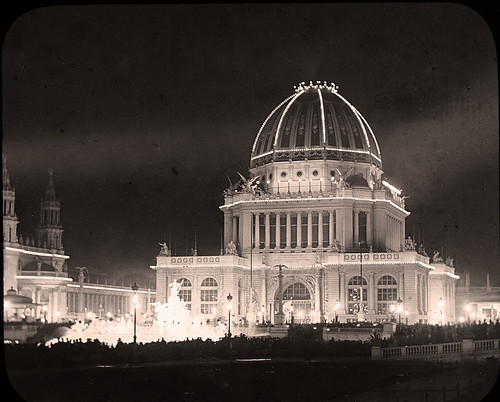
Electricity was a new an exciting phenomenon at the Fair. The Electricity Building showcased a telephone, electric lamps, gramophones, elevators, fans, burglar alarms, stoves, irons, and engines of all sorts. The world's first telegraph and seisomgraph machines, Edison's Kinetoscope, and a moving sidewalk were also new electric inventions at the Fair. Electric trains brought people to the Fair. The entire Fair was lit with electric lighting both inside and out.
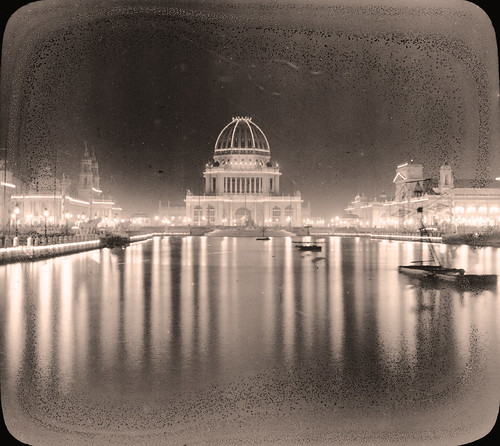
Administration Bldg. at night
The White City

Administration Building at NIght
Administration Building at night

A popular area of the fairgrounds was the Midway Plaisance, a carnival-like street one mile long. It was a lot like Disney's Epcot World Showcase, in that it featured exhibits from foreign lands, with supposed native people brought over to represent the exhibits.
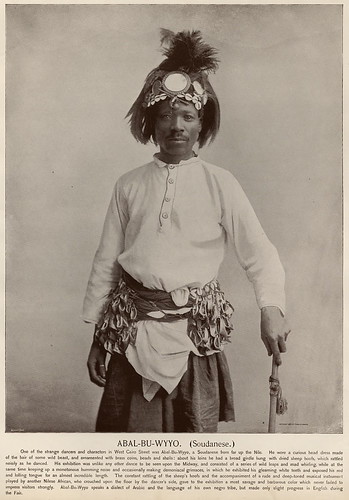
Sudanese Performer at the Midway
Sudanese Performer at the Midway Plaisance

Countries represented displayed an Irish village and goods (with a replica of Blarney Castle), a German village, Old Vienna cafe and shops, Chinese village, Dutch village, Japanese bazaar as well as exhibits from Egypt, Persia, Turkey, Algeria, Tunis, East India, American Indian, Lapland, and Bedouins and Dahomeys. Egypt's "Street in Cairo" featured the most lucrative exhibit at the entire fair: the dancing girls, most famously, "Little Egypt," who did the hootchy-cootchy dance!
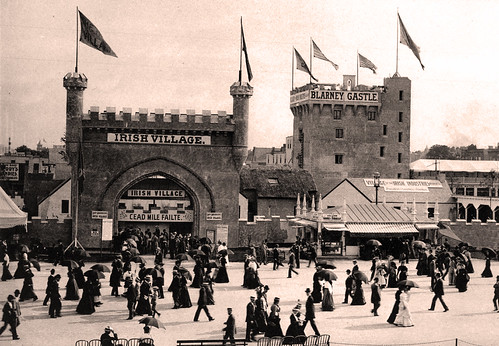
Irish Village on the Midway Plaisance
Irish Village and Blarney Castle replica on the Midway
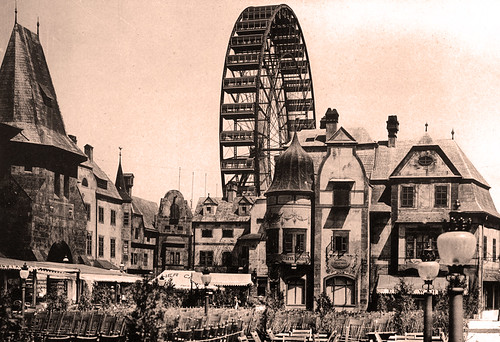
German Village and Ferris Wheel, Midway Plaisance
German Village on the Midway

The Midway also had the Libby Glass Works, Hagenbeck's Animal Show, the Ice Railway & toboggan slide, an International Beauty Show, a Captive Balloon, and Eadweard Muybridge's Zoöpraxographical Hall (early motion picture animal studies).
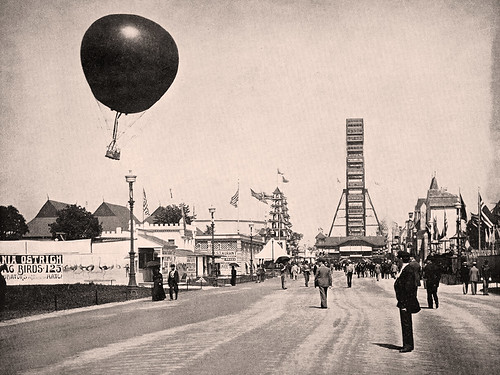
Tethered Balloon & Ferris Wheel on the Midway Plaisance
Captive Balloon ride on the Midway Plaisance

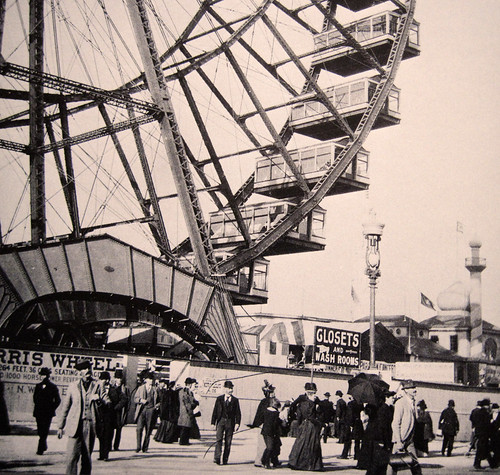
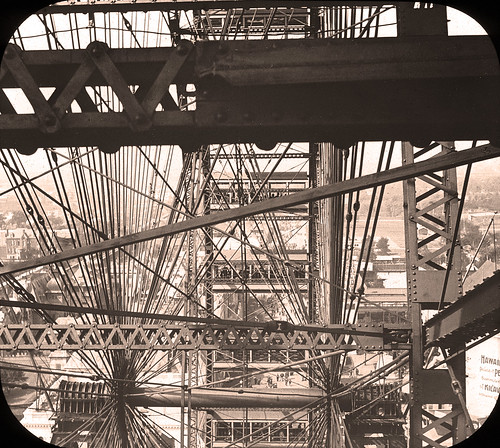
But the most impressive exhibit was erected to rival the Eiffel Tower that was built in Paris for it's 1889 World's Fair. A contest was held, and George W. Ferris was given the honor of constructing his giant Wheel. It was 250 ft. in diameter and contained 36 bus-sized cars that could hold 60 people each! Two revolutions lasted 20 minutes and cost 50 cents. Boy, would I love to have ridden that very first Ferris Wheel!
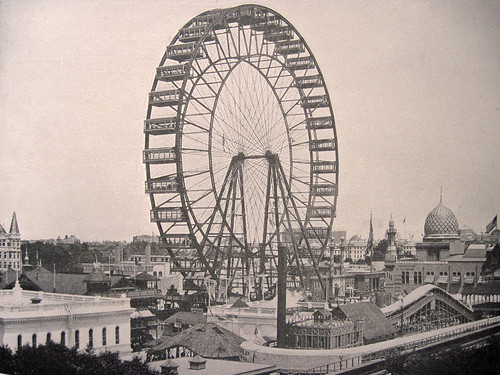
Ferris Wheel
Ferris Wheel on the Midway Plaisance

bottom of Ferris Wheel
Base of the Ferris Wheel

On the Ferris Wheel
Riding the Ferris Wheel

Things introduced to the public at the Columbian Exposition were:

Soda pop, hamburgers, Juicy Fruit Gum, Cracker Jacks, Pabst Blue Ribbon beer, Quaker Oats, Cream of Wheat, Shredded Wheat, Aunt Jemima syrup, elongated coins, picture postcards, the Pledge of Allegiance, Columbus Day, and Scott Joplin's ragtime music! Dvorack composed his New World Symphony in honor of the Fair. And L. Frank Baum was so impressed with the Fair, he based Oz on it!
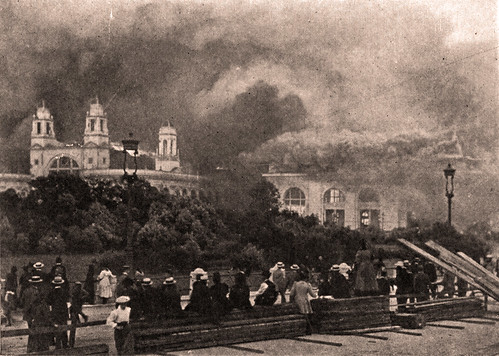
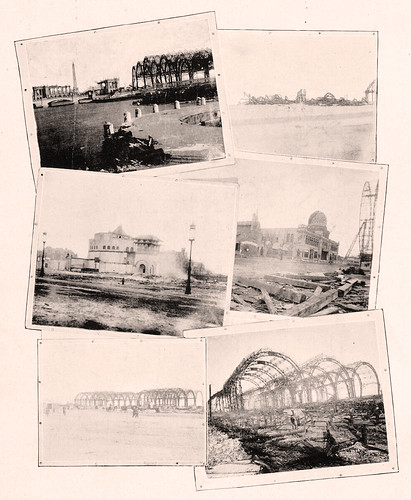
By the close of the fair, many buildings were already decaying, and some had already tragically burned to the ground. All the treasures were taken back from whence they came. The people went home. All that was left were souvenirs and memories.

1893 World's Columbian Expo — Building on fire
Fairground buildings on fire

the Fair in ruins
Ruins of The White City


Here are some great links I came across while researching the Columbian Exposition of 1893:

FREE Digital books from the time of the Columbian Exposition of 1893. A fantastic source for original material!
ERBzine —Nice collection of images from the Columbian Exposition
Idea, Experience, Aftermath —an excellent overview
some Photos
more Photos
UCLA digitally simulated tour of the World's Columbian Exposition fairgrounds! Rough outline, but they've made progress. View updates on UCLA's site here. I think this project is fascinating!
For more on Muybridge's work, click here.


Labels: , ,

Sunday, November 20, 2011

The World's Columbian Exposition of 1893

World expositions, or world fairs, became a big hit after the famously successful Great Exposition in the Crystal Palace in London in 1851. Every major world city dreamed of hosting one! These fairs displayed the latest technological advances of the Industrial Revolution. They also displayed the latest style trends of fashion, art, architecture and design. New products made debuts at these fairs, and world cultures and entertainments were brought together for the benefit and enjoyment of the fairgoer!
For years, I've been fascinated with the Chicago World's Fair of 1893, also known as the World's Columbian Exposition. I've collected souvenirs from the Fair, and have acquired books from the time, as well as modern day history and photo books. In other words, if it has anything to do with the Columbian Exposition, I want it!

This week, I'll show you some of my collection of souvenirs and books from the Columbian Exposition. These are things I probably would have picked up if I had attended!


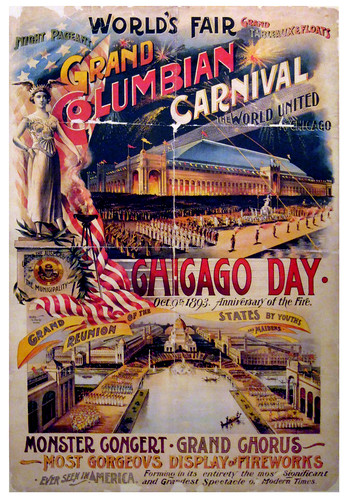
This is a reprint of a poster from "Chicago Day" hanging in my stairwell. October 9th was designated Chicago Day at the Fair in memory of the Great Chicago Fire of October 9th, 1871.

Chicago Day poster


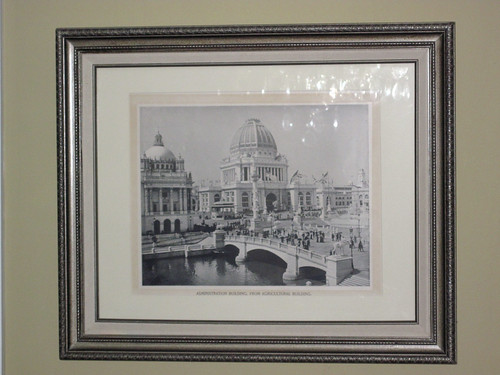
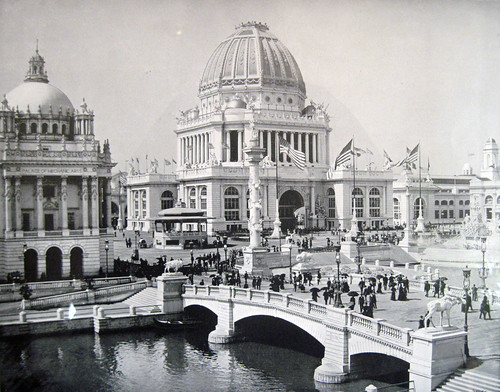
I have a large, original photographic print showing the Administration Building framed and hanging on my library wall. I love gazing into the photo, and imagining walking along that elegant walkway in my finest dress and parasol!

Columbian Exposition, Administration Building print

Columbian Exposition, Admin. Bldg.


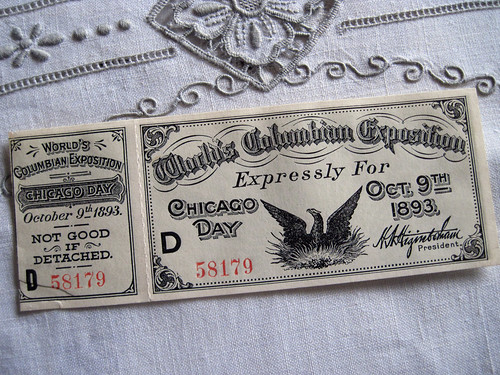
Here's an actual ticket from Chicago Day. It's unused... I wish I could still go!

Chicago Day ticket


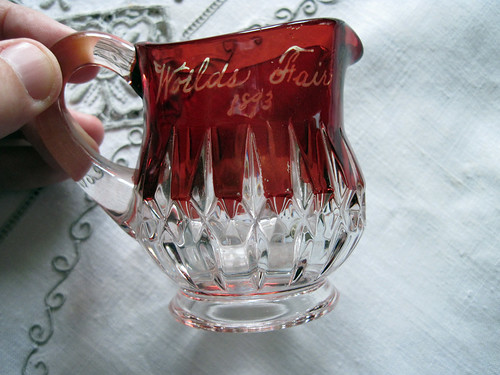
I would certainly have enjoyed the impressive glass exhibits, and probably would have purchased this miniature ruby flashed souvenir creamer.

Souvenir ruby glass miniature creamer


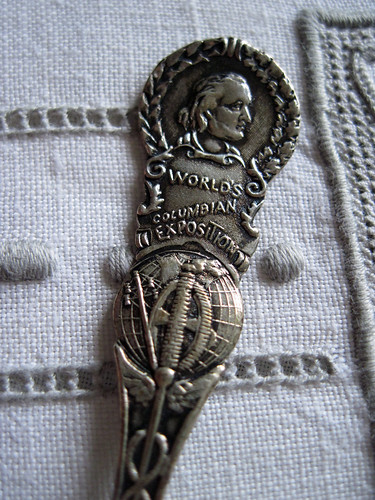
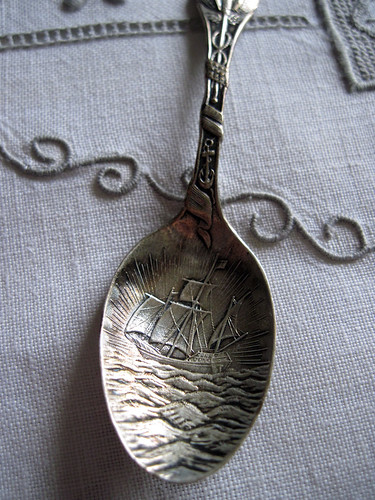
Who could leave the Fair without a souvenir spoon depicting Columbus himself?

Souvenir Spoon handle

Souvenir Spoon, bowl


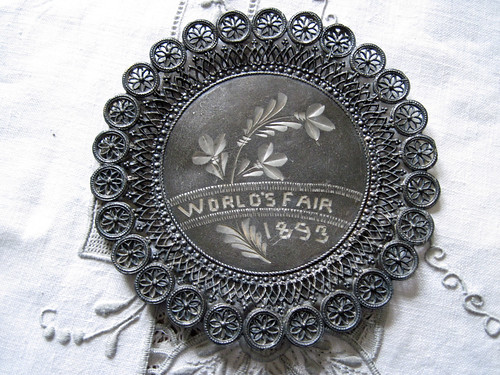
I don't know the purpose of this shallow aluminum souvenir tray. Maybe it could be used on a ladies dresser to hold hair pins or spare change.

Coaster


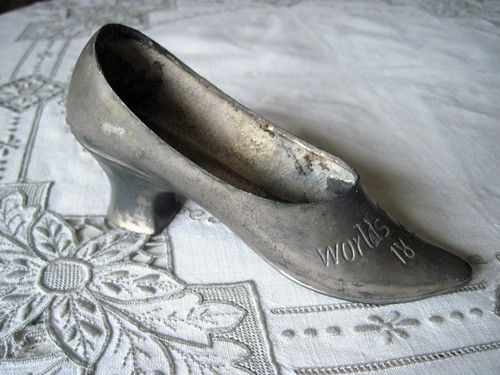
A woman's shoe made of pot metal. This used to be a pincushion!

Shoe


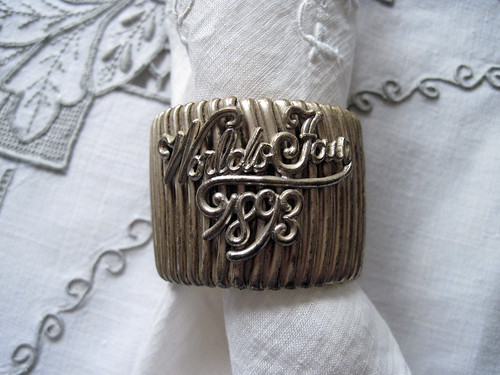
A napkin ring made of a soft metal, possibly lead.

Napkin Ring


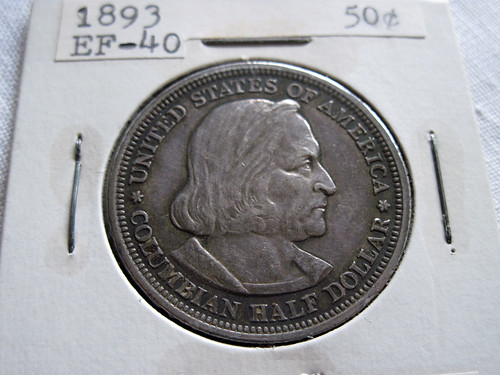
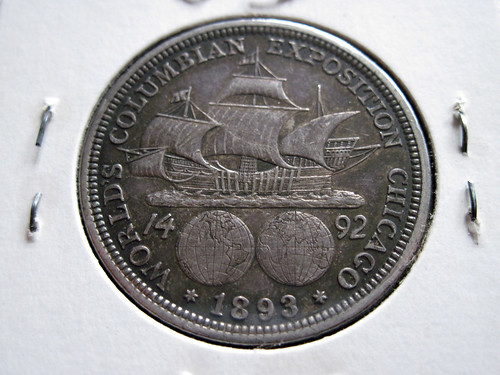
A 50¢ piece minted by the U.S. Treasury. These were sold at the Fair for a dollar apiece.

50¢ Piece-obverse

50¢ Piece-Reverse


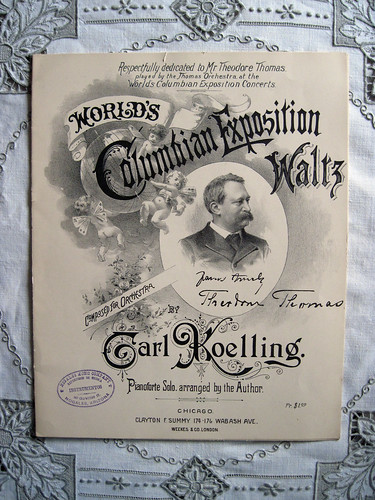
Sheet music of the World's Columbian Exposition Waltz!

Columbian Exposition Waltz


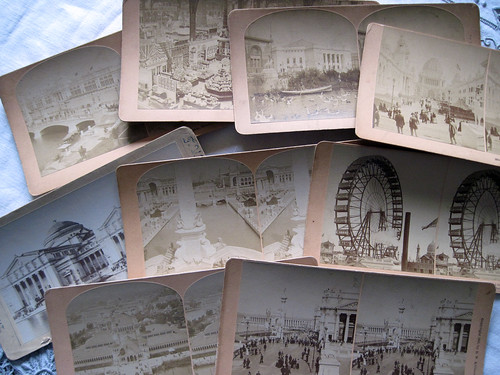
Of course, I have lots of stereographs of the Fair!

Stereographs


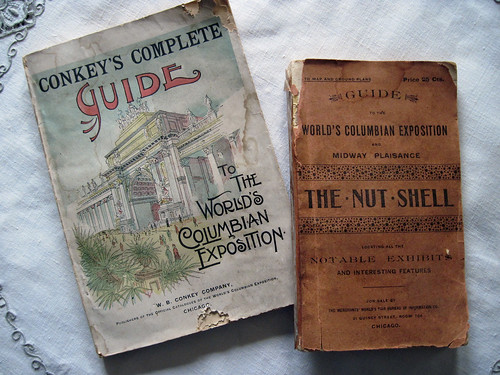
I love reading anything I can about the Fair. Here are some of the guidebooks that helped people navigate the fairgrounds and exhibits.

Columbian Exposition guidebooks


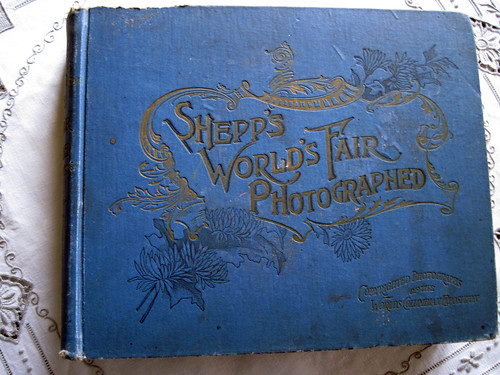
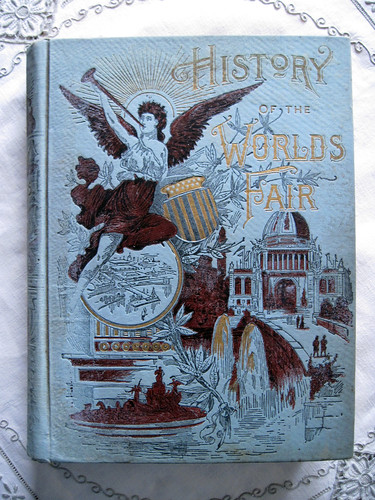
These two large volumes were published shortly after the Fair closed. They contain very comprehensive histories and photographs.

Shepp's World's Fair Photographed

History of the World's Fair, book


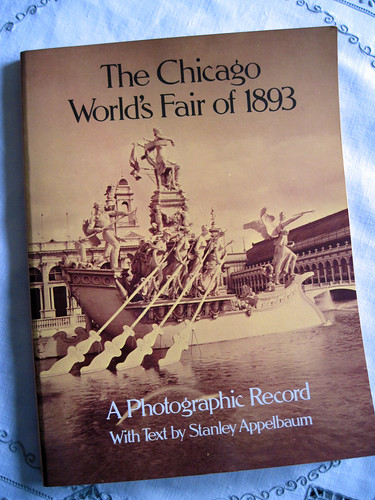
I collect modern materials about the World's Columbian Exposition, too. This book from Dover is one of my favorites. It's a really nice overview of the Fair with great photographs and narrative.

Columbian Exposition, great book


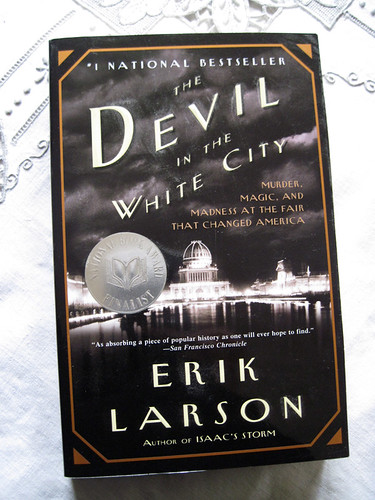
This bestseller is a semi-fictionalized account of the true story of the Fair and a murderous monster who preyed on innocent tourists outside the fairgrounds. A great read!

Devil in the White City


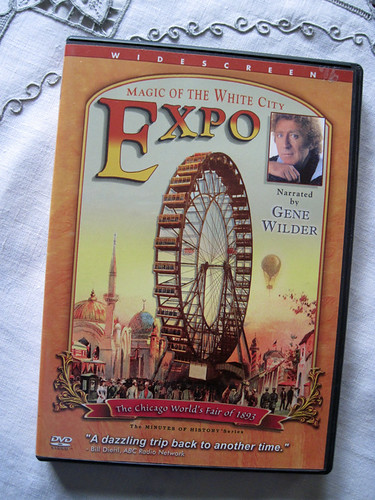
And finally, here's a fairly well done documentary narrated by Gene Wilder. It brings the Fair to life like no book can. My only gripe is that they show too much new footage of a scantily-clad dancing girl. More about her next week!

DVD


Next time, I'll tell you about the Fair itself, what went into the planning and building phases, the most popular attractions, and the last days of the 1893 World's Columbian Exposition!


Labels: , , ,

Saturday, November 5, 2011

Graceland Cemetery: Part 2

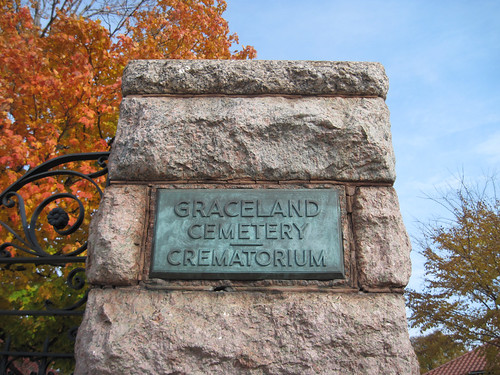
Last week's visit to Chicago's Graceland Cemetery yielded so many photos, I needed a second post to showcase all the interesting monuments we saw there!
Graceland Cemetery, Chicago

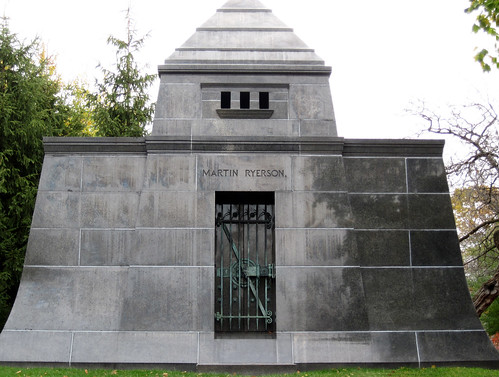
This week, I'll focus on the more famous people buried at Graceland. During the late Victorian era, Chicago was experiencing an architectural renaissance. Many famous architects made a name for themselves here, and a good many of them are buried in Graceland. Last year I did a post on one of my favorites, Louis Sullivan (read that post here). In Sullivan's later years, he was reduced to designing whatever would bring in a bit of money, because his grand style skyscrapers were no longer in vogue. Some of his designs included mausoleums, such as this one he designed for lumber baron Martin Ryerson.
Graceland Cemetery, Chicago

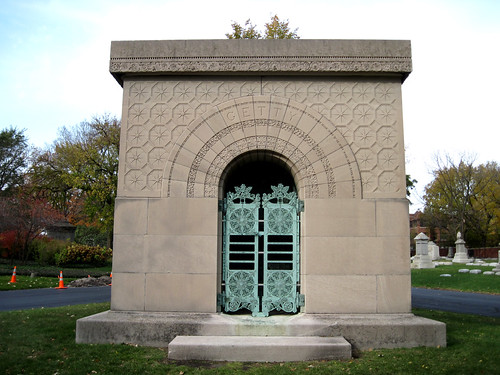
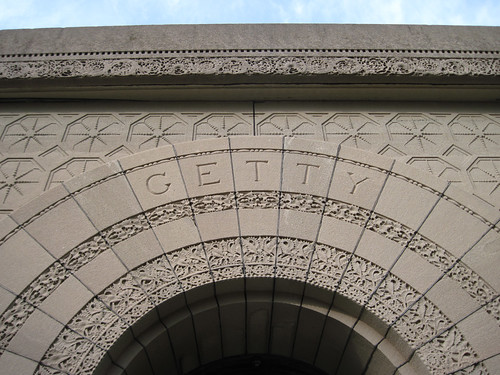
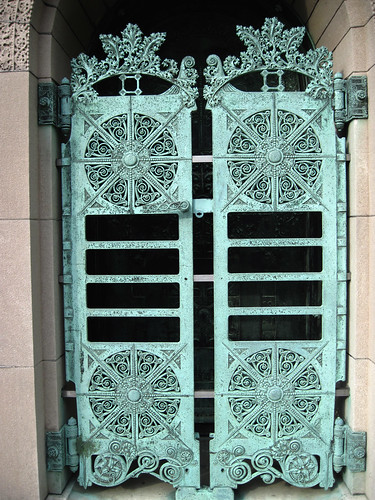
When Ryerson's partner, Henry Harrison Getty, saw Ryerson's tomb, he had Sullivan create one for his wife Carrie in 1890.

Graceland Cemetery, Chicago

Graceland Cemetery, Chicago

Graceland Cemetery, Chicago

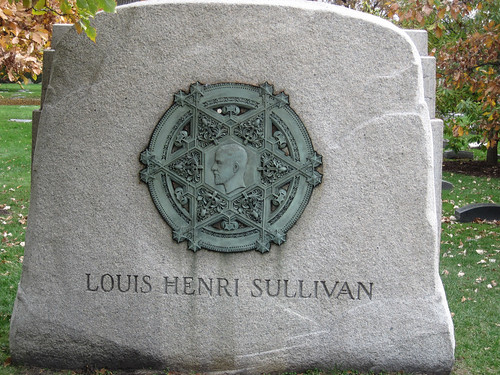
The Getty Tomb is now a designated Chicago Landmark. Louis Sullivan himself is buried at Graceland. Dying a pauper, his funeral was funded by his friend Frank Lloyd Wright. Only years later was this monument erected at his grave.

Graceland Cemetery, Chicago

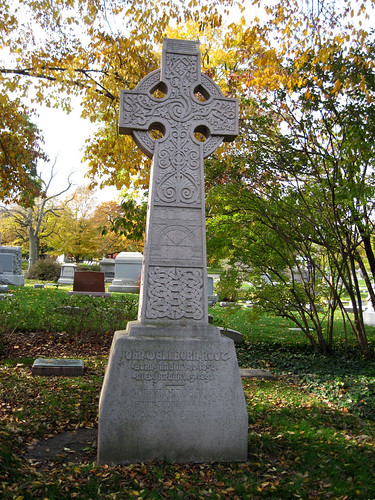
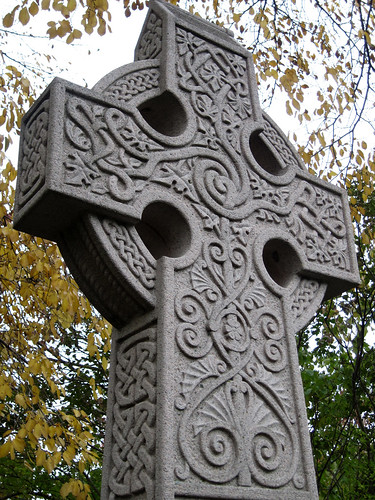
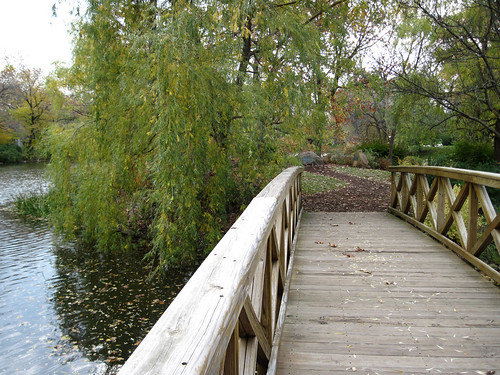
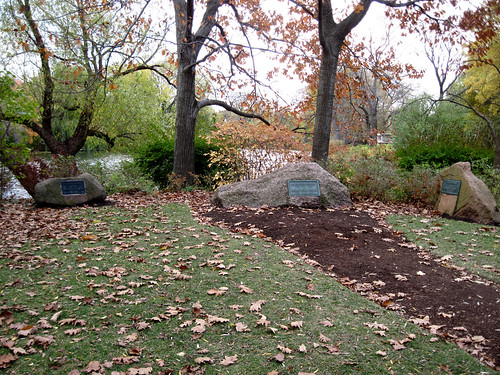
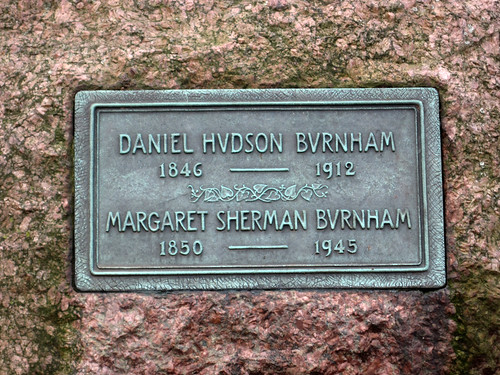
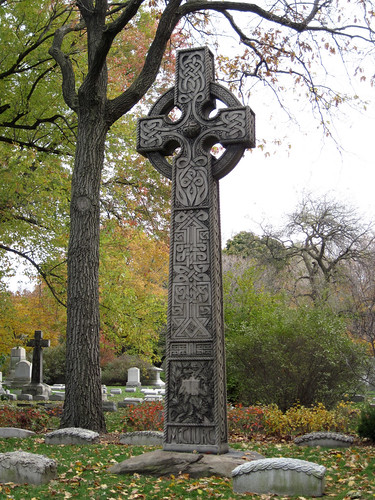
The famous architectural firm of Burnham & Root helped shape the buildings of Chicago in the 1880's through the 1890's. The team led the construction of the World's Columbian Exposition of 1893. Root died before construction had begun, and Burnham went on to complete the Fair, and had much future success. Both are buried here at Graceland. John Wellborn Root with his Celtic cross, and Daniel Hudson Burnham with his family buried on a private island, accessible by foot bridge, and plots marked with natural looking rocks.

Graceland Cemetery, Chicago

Graceland Cemetery, Chicago

Graceland Cemetery, Chicago

Graceland Cemetery, Chicago

Graceland Cemetery, Chicago

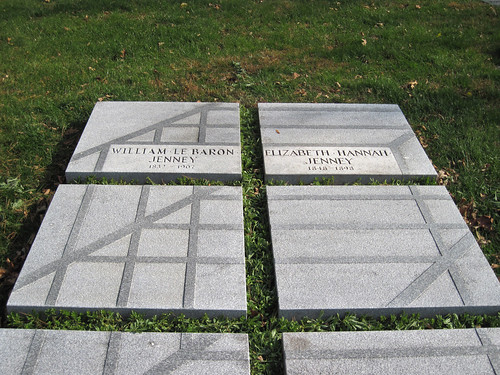
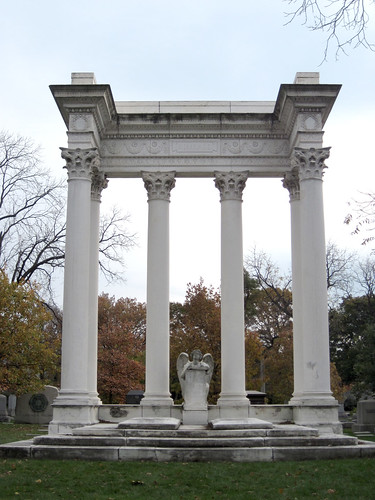
Many other famous architects are buried here, including William LeBaron Jenney (designed the first "skyscraper" with a full metal frame);

Graceland Cemetery, Chicago

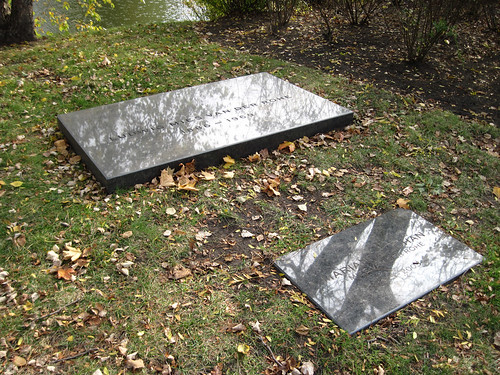
Ludwig Mies van der Rohe (pioneer of Modern architecture, "Less is More");

Graceland Cemetery, Chicago

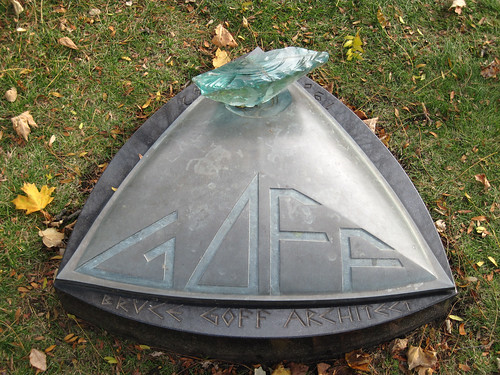
and Bruce Goff (early student of Frank Lloyd Wright, designed a lot of buildings in Oklahoma).

Graceland Cemetery, Chicago


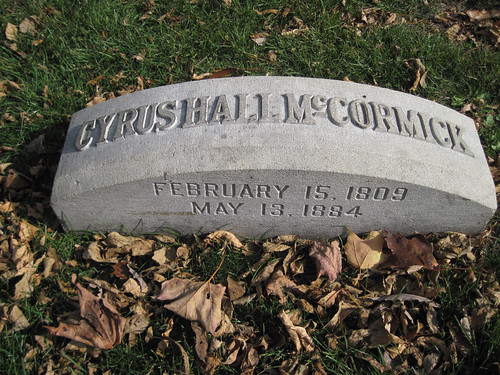
Some nationally famous people are also buried in Graceland. Cyrus McCormick (founder of what became International Harvester, perfected the reaper);

Graceland Cemetery, Chicago

William Kimball (of piano and organ fame);

Graceland Cemetery, Chicago

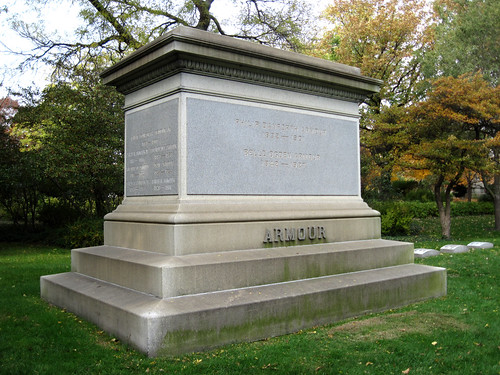
Philip Armour (meatpacker);

Graceland Cemetery, Chicago

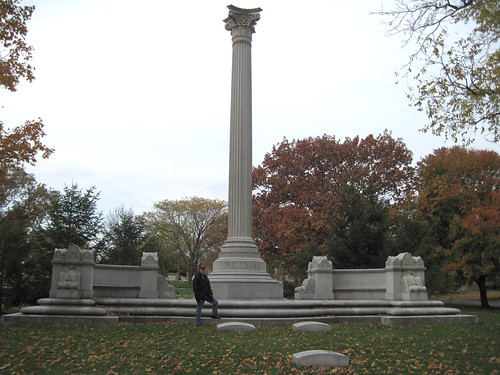
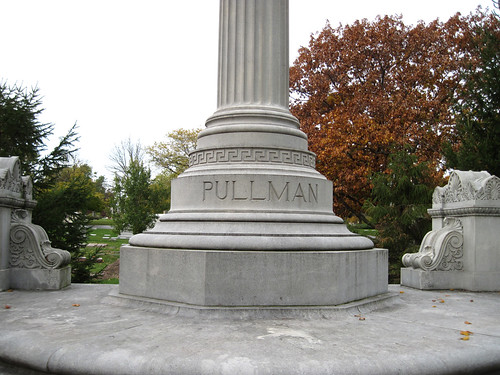
and a couple famous "bosses" on opposite ends of the spectrum. George Pullman is known for inventing the railroad sleeping car, and created an entire city-within-a-city for his employees in south Chicago. But he ruled with an iron fist. His workers famously went on strike in 1894. He was widely hated, and when he died in 1897, was buried in the cover of night, within a heavy lead-lined coffin and beneath tons of cement. They were worried labor activists would try to remove the body.

Graceland Cemetery, Chicago

Graceland Cemetery, Chicago

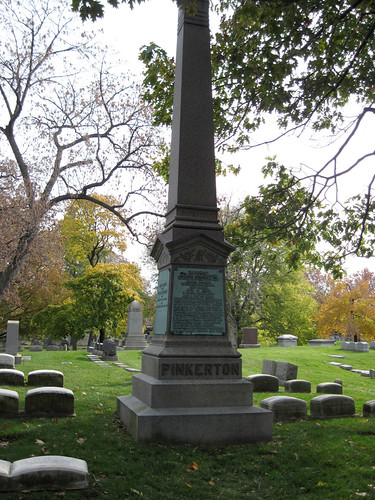
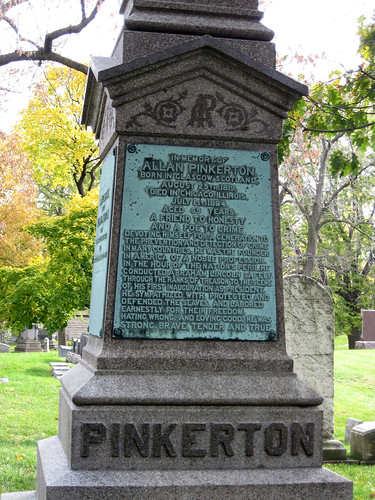
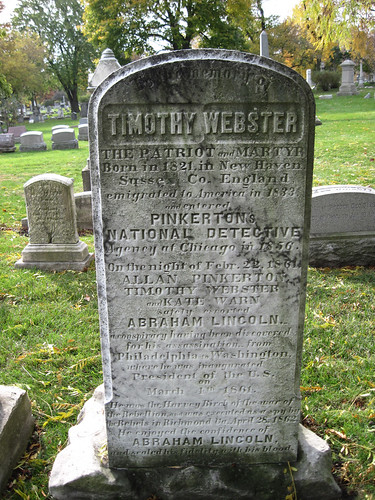
Then there was Allan Pinkerton, the founder of the famous detective agency. Pinkerton and his men foiled an assassination plot against Abraham Lincoln on his route to his inauguration, and he formed the forerunner of the Secret Service.

Graceland Cemetery, Chicago

Graceland Cemetery, Chicago

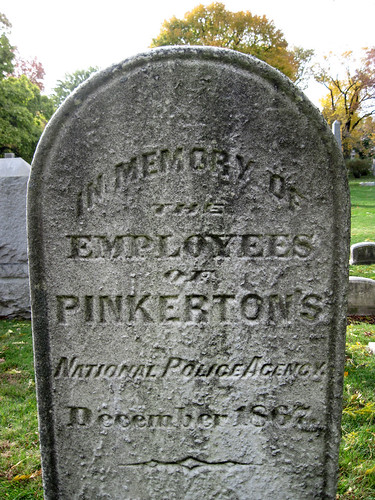
Pinkerton's plot contains his family, and several devoted employees!

Graceland Cemetery, Chicago

Graceland Cemetery, Chicago


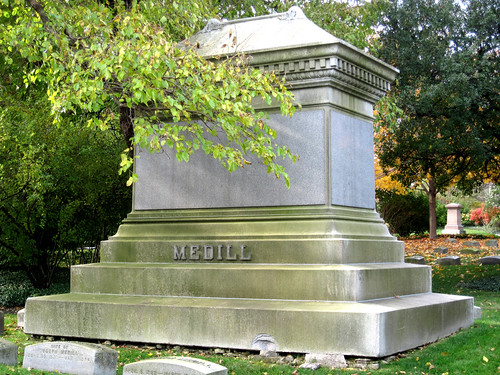
Then there are powerful movers and shakers of Chicago. Joseph Medill was the 26th mayor of Chicago, owner of the Chicago Tribune, and co-founder of the Republican Party.

Graceland Cemetery, Chicago

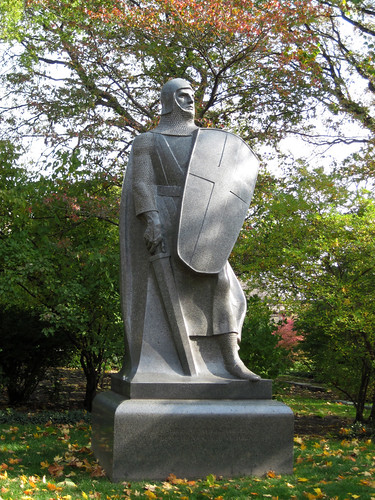
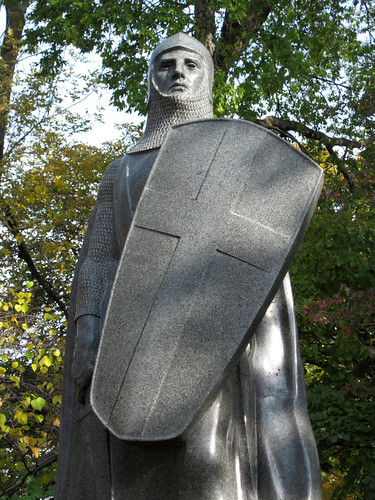
Victor Lawson owned the Chicago Daily News. Sculptor Lorado Taft (who also designed "Eternal Silence" for Dexter Graves' gravesite at Graceland) designed the monument "Crusader" for him.

Graceland Cemetery, Chicago

Graceland Cemetery, Chicago

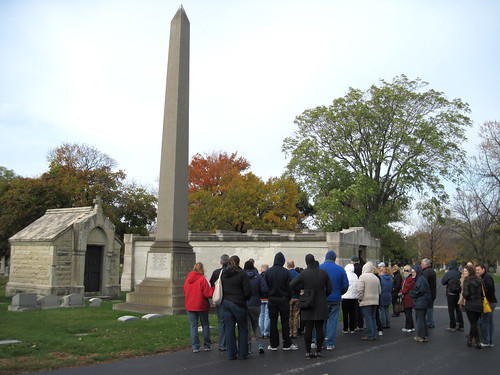
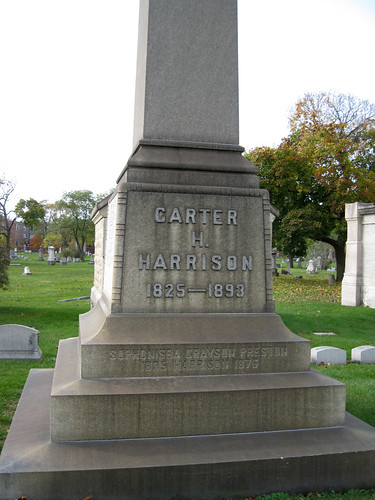
Carter H. Harrison, the 29th mayor of Chicago, was assassinated at his home only two days before the closing ceremonies at the Columbian Exposition in 1893. Upon our arrival at his memorial, a tour group led by the Chicago Architecture Foundation was learning about his fate.

Graceland Cemetery, Chicago

Graceland Cemetery, Chicago


There are many people whose names are now only known to most Chicagoans because of the streets that were named after them. For instance, General Alexander C. McClurg's Celtic cross was designed by Louis Comfort Tiffany. He was a Civil War soldier, and publisher of Tarzan of the Apes.

Graceland Cemetery, Chicago

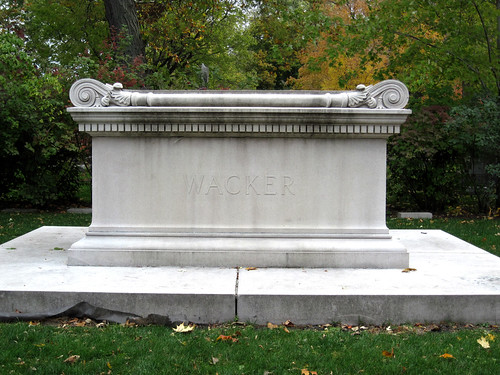
Charles H. Wacker was director of the Columbian Exposition, and later Chairman of the Chicago Plan Commission.

Graceland Cemetery, Chicago

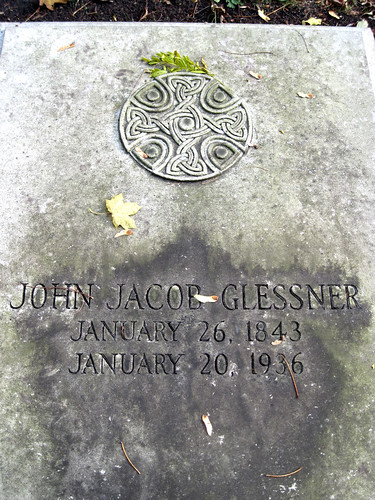
John Jacob Glessner was vice president of International Harvester. His home is now a museum on Chicago's Prairie Avenue.

Graceland Cemetery, Chicago

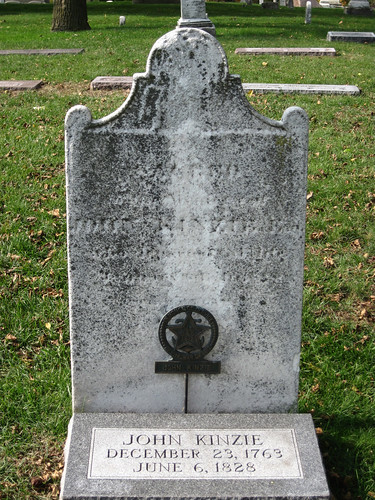
John Kinzie was one of Chicago's first European settlers. His remains have been moved twice, once from the original Fort Dearborn Cemetery to Lincoln Park in 1835, then to Graceland in the 1870's.

Graceland Cemetery, Chicago


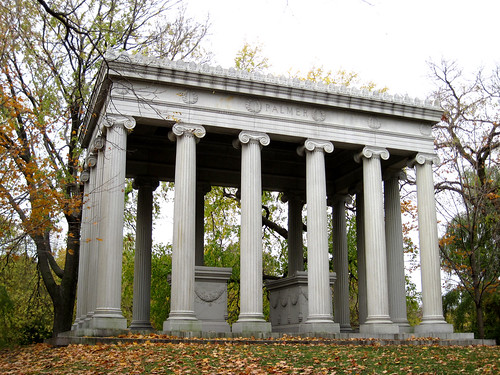
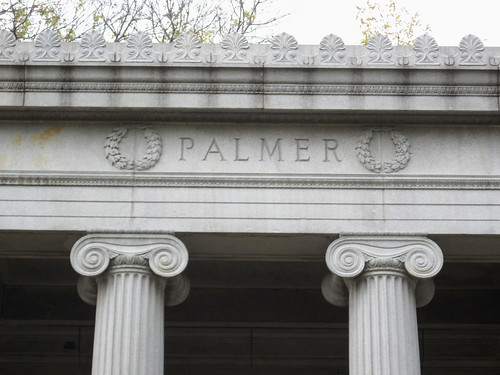
Finally there are the merchant tycoons whose presence is still felt in Chicago. Potter Palmer and his wife Bertha were the upper eschelon of Chicago society. Palmer developed State Street, was a dry goods merchant, and real estate tycoon. His famous Palmer House Hotel burnt to the ground in the Great Chicago Fire of 1871. Palmer borrowed 1.7 million to rebuild it. You can still stay at the Palmer House today. His wife Bertha was a socialite and art collector. Her collection of French impressionist paintings was unrivaled, and is still on display at the Art Institute of Chicago.

Graceland Cemetery, Chicago

Graceland Cemetery, Chicago

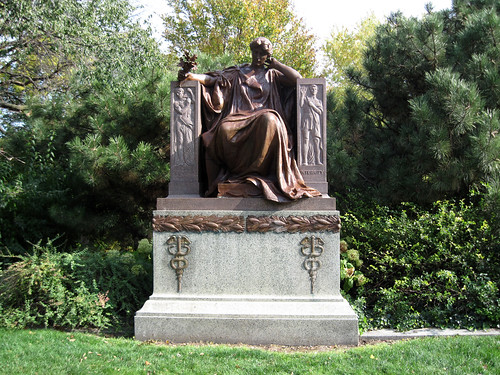
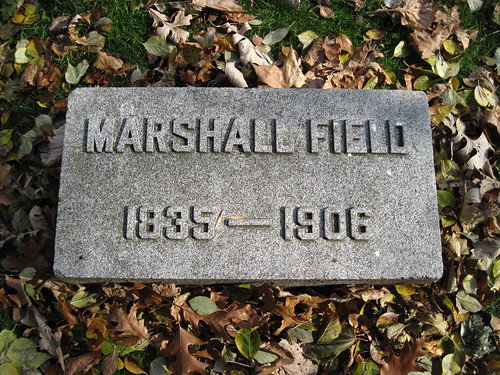
Potter Palmer's dry goods business was bought out by one of his partners, Marshall Field. He made the department store what it is today, and coined the term, "Give the lady what she wants." The Field Museum of Natural History is named after him after he endowed a million dollars. He also co-founded the University of Chicago with John D. Rockefeller. Until 2006, Chicagoans could still shop at the famous Marshall Field's store on State Street.

Graceland Cemetery, Chicago

Graceland Cemetery, Chicago

Sadly, after many mergers and acquisitions, Macy's took over Marshall Field's and changed it's name. Being a true-blue Chicagoan, I still refuse to ever step inside a Macy's store!

Read more about the lives of these famous Chicagoans buried at Graceland:


Labels: ,